
There are specific changes to the building data that require updating the Carbon Signal model. A new version is created when you change the floor area, the building type, the location, the model calibration year or the energy data in that year, or the model refinements. Each of these affects how the building uses energy, so Carbon Signal has to recalibrate.
Edits to energy data in years other than the calibration year do not create a new version, since they are not used in calibration.
What is a Model Version?
During the model calibration process, Carbon Signal tries to identify the unique combination of model input parameters that can explain each building’s pattern of energy use. Therefore, any change that can affect how or why the building uses energy requires an update to the calibration routine.
When you make changes to specific inputs, such as building size or location, Carbon Signal reruns the calibration routine and creates a new model with a specific version number. Anything that doesn’t impact energy use, such as a change to the emissions factors or modifying the building name, will not result in a new model. Think of a model version as a unique set of assumptions about the building. Anytime those assumptions change, we create a new version of the model.
Changing Versions
To revert to an earlier version of the model, navigate to the detailed view for a building by clicking on a row in the data table on the Buildings page. In the top right corner of the detail view click Model history.
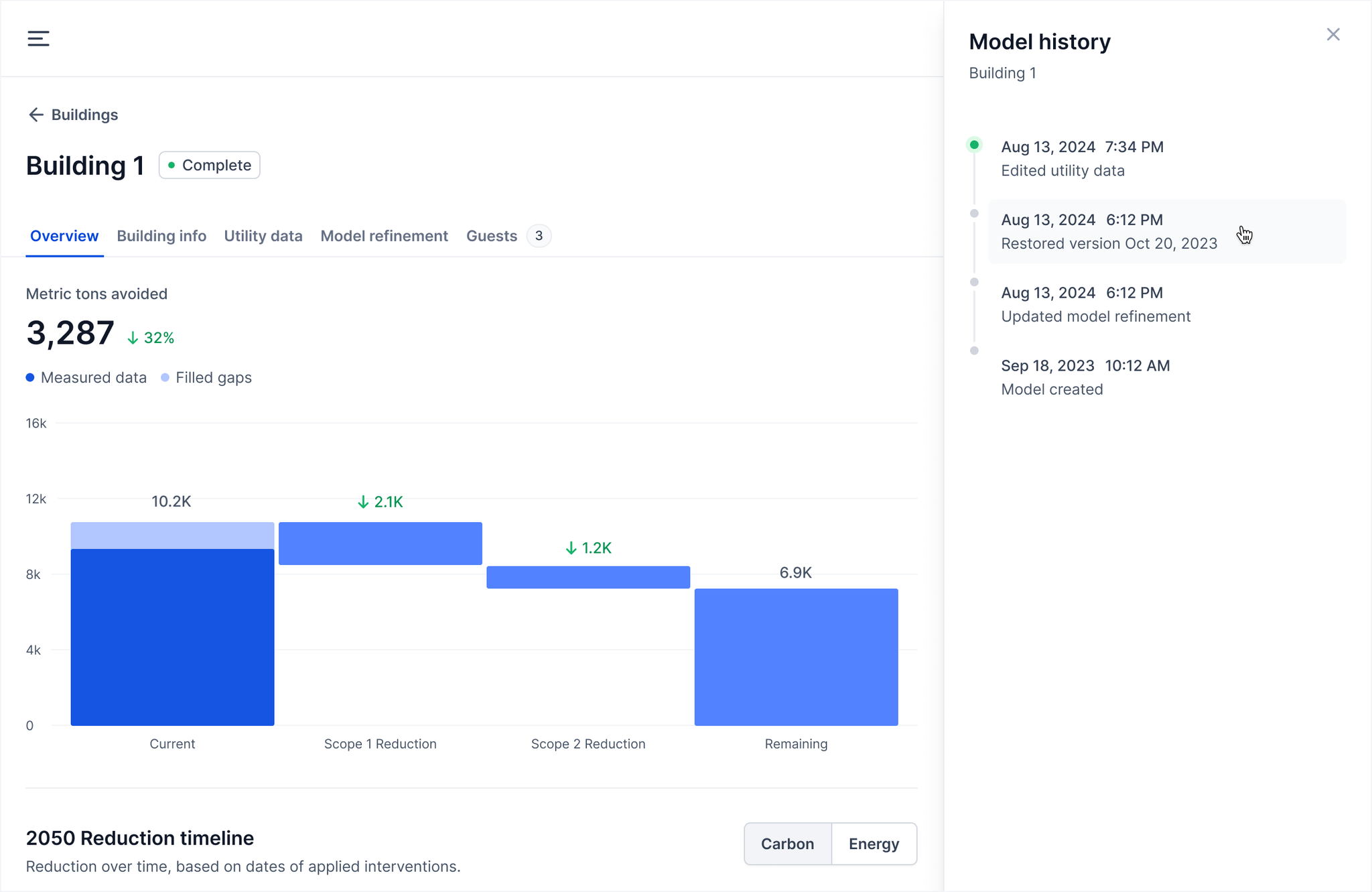
Each version of the model appears in the list with the date and time it was created and a short summary of what changed, such as Created model, Edited utility data, Edited building info, Edited model refinement, or Restored from previous model. The list does not record which Team Member made the change.
Restoring a version makes it the current version and re-runs the analysis that depends on it, so the results take a few minutes to regenerate. Restoring re-syncs only the calibration year from that version’s snapshot; energy data you have since edited in other years is left as it is. The restore itself is recorded as a new entry in the history.